I was touched by this trailer about Classical music in Congo:
Thanks to Jean-Marie Zeitouni for the heads up!
-John Clare, afternoon host
Tuesday, July 19, 2011
Friday, July 15, 2011
Making a difference through music...

War, revolutions, strikes, floods and executions are part and parcel in today's world, in the 19th century there was even more history being made and in Europe pianist Franz Liszt was a part of it. As the most famous living Hungarian, Liszt was in a unique position to live the life of an artist a new way, reflecting his hectic times with his music and also having the power to do something to somehow change and improve things.
On the Piano this Sunday Franz Liszt, Politics & Music. This program starts with the 18 year old pianist witnessing the bloodshed in the 1830 revolution in Paris, then his growth as a person and his stance during the disastrous Hungarian revolt of 1848. Then there is Liszt's nationalism and how it made its way to European concert halls and to end the story, his views on the tumultuous times in which he lived and his opinions of the future of mankind culminating with his last memorials for the Heroes of Hungary.
Liszt and Politics, hear it this Sunday afternoon at 5 on KPAC & KTXI.
host, Randy Anderson
On the Piano this Sunday Franz Liszt, Politics & Music. This program starts with the 18 year old pianist witnessing the bloodshed in the 1830 revolution in Paris, then his growth as a person and his stance during the disastrous Hungarian revolt of 1848. Then there is Liszt's nationalism and how it made its way to European concert halls and to end the story, his views on the tumultuous times in which he lived and his opinions of the future of mankind culminating with his last memorials for the Heroes of Hungary.
Liszt and Politics, hear it this Sunday afternoon at 5 on KPAC & KTXI.
host, Randy Anderson
Wednesday, July 13, 2011
ASM 35 years!
One of our favorite artists is celebrating 35 years of recording - Anne-Sophie Mutter, who has just finished an amazing season as artist in residence with the New York Philharmonic, is now releasing a new set of 40 cds!
Being released in August to mark the 35th anniversary of her public debut is a limited-edition 40-CD deluxe box, with bonus CDs including recordings from Anne-Sophie Mutter’s youth, chamber music with Lambert Orkis, the Lutosławsi Memorial Concert of 1995 and André Previn’s Double Concerto for Violin and Contrabass.
Locally, violinist Nancy Zhou studies with Mutter and performs with her around the world. Zhou recently placed in the semi finals of the prestigious Tchaikovsky Competition and will be attending Harvard this fall. She'll perform as soloist with the San Antonio Symphony this year again as well!
Being released in August to mark the 35th anniversary of her public debut is a limited-edition 40-CD deluxe box, with bonus CDs including recordings from Anne-Sophie Mutter’s youth, chamber music with Lambert Orkis, the Lutosławsi Memorial Concert of 1995 and André Previn’s Double Concerto for Violin and Contrabass.
Locally, violinist Nancy Zhou studies with Mutter and performs with her around the world. Zhou recently placed in the semi finals of the prestigious Tchaikovsky Competition and will be attending Harvard this fall. She'll perform as soloist with the San Antonio Symphony this year again as well!
Tuesday, July 12, 2011
Aloegretto Quintet rehearsal at Cactus Pear

Monday, July 11, 2011
Cactus Pear's Orient Express program incorporates Mozart and many more
by Valerie Cowan
The lack of stage space for a grand piano in the New Braunfels Presbyterian Church didn’t put a stop to the Cactus Pear Musical Festival during its Friday, July 8 performance. Instead of the Brahms Piano Quartet on the original Orient Express program, the audience was treated to the beautiful, light-hearted sonorities of the Mozart Quintet in E-flat Major, K. 407, featuring San Antonio principal horn player Jeff Garza.
Mozart arranged the piece for horn, two violas, one violin, and cello. Stephanie Sant’Ambrogio, the Cactus Pear artistic director and former San Antonio Symphony concertmaster, announced that this was her debut performance on viola and that she had been playing viola for just four years prior to this performance.
The interwoven tradeoff in melody between the horn and the violin (performed by Carmit Zori), especially during the Andante movement, sounded like a romantic soprano-baritone vocal duet and showcased not only Mozart’s compositional genius but also the artistic propensity of the performers.
The third movement, a Rondo: Allegro, featured charming melodic lines in which Garza took on a star role as the horn parts became impressively virtuosic.
After the group opened with the Mozart Quintet, the artists returned to the Orient Express program with a performance of Ernö Dohnányi’s 1904 Serenade in C, op. 10, for violin, viola, and cello. Infused with the passionate, bold flavor of Hungarian folk melodies, the piece utilized the differing timbres of the instruments and dynamic extremes to the fullest.
The Serenade was followed by an intermission and then Alexander Glazunov’s Oriental Reverie for clarinet and string quartet, written in 1886. The opening clarinet solo, performed by principal clarinet of the San Antonio Symphony Ilya Shterenberg, truly paints a musical picture of time and place. The drama and tension of the piece had me sitting on the edge of my seat.

The concert concluded with Anton Arensky’s 1895 String Quartet no. 2 in A minor, op. 35. The unique instrumental arrangement for this piece featured two cellos along with just one violin and one viola. Unlike Glazunov’s Oriental Reverie, which seemed like one continuous wave of sound, the Arensky Quartet was full of meaningful silences and poignant melodic lines.
Sant-Ambrogio couldn’t have described the performance better when she commented to the audience members that she wanted them to feel as though they were listening to a performance in their own living rooms. Between pieces and at times even between movements, the concert was infused with informal yet informative commentary by the members of the Cactus Pear ensemble. Even though the audience shared casual laughs with the performers between pieces, the musicians returned to concentrated professionalism and flawless artistic expression while performing and sharing their passion for music.

Mozart arranged the piece for horn, two violas, one violin, and cello. Stephanie Sant’Ambrogio, the Cactus Pear artistic director and former San Antonio Symphony concertmaster, announced
 that this was her debut performance on viola and that she had been playing viola for just four years prior to this performance.
The interwoven tradeoff in melody between the horn and the violin (performed by Carmit Zori), especially during the Andante movement, sounded like a romantic soprano-baritone vocal duet and showcased not only Mozart’s compositional genius but also the artistic propensity of the performers.
The third movement, a Rondo: Allegro, featured charming melodic lines in which Garza took on a star role as the horn parts became impressively virtuosic.

After the group opened with the Mozart Quintet, the artists returned to the Orient Express program with a performance of Ernö Dohnányi’s 1904 Serenade in C, op. 10, for violin, viola, and cello. Infused with the passionate, bold flavor of Hungarian folk melodies, the piece utilized the differing timbres of the instruments and dynamic extremes to the fullest.
The Serenade was followed by an intermission and then Alexander Glazunov’s Oriental Reverie for clarinet and string quartet, written in 1886. The opening clarinet solo, performed by principal clarinet of the San Antonio Symphony Ilya Shterenberg, truly paints a musical picture of time and place. The drama and tension of the piece had me sitting on the edge of my seat.

The concert concluded with Anton Arensky’s 1895 String Quartet no. 2 in A minor, op. 35. The unique instrumental arrangement for this piece featured two cellos along with just one violin and one viola. Unlike Glazunov’s Oriental Reverie, which seemed like one continuous wave of sound, the Arensky Quartet was full of meaningful silences and poignant melodic lines.
Sant-Ambrogio couldn’t have described the performance better when she commented to the audience members that she wanted them to feel as though they were listening to a performance in their own living rooms. Between pieces and at times even between movements, the concert was infused with informal yet informative commentary by the members of the Cactus Pear ensemble. Even though the audience shared casual laughs with the performers between pieces, the musicians returned to concentrated professionalism and flawless artistic expression while performing and sharing their passion for music.
What's your favorite
There is new research that music purchases are on the rise. What have you bought lately that you love? Anything that you are listening to all of the time? Share with us in the comments section or on facebook.
I've recently received the new Genghis Barbie cd and it comes up frequently in my iTunes. Read my review here. - John Clare, afternoon host
I've recently received the new Genghis Barbie cd and it comes up frequently in my iTunes. Read my review here. - John Clare, afternoon host
Friday, July 8, 2011
Magical and how it got that way…
 Had Alexander Scriabin died when he was twenty-five, he would have been chalked up as another promising composer, luckily he lived another eighteen years and not only fulfilled that earlier promise but he greatly dared and expanded his vision of what music was and what it could do.
On the Piano this Sunday a listen to the late music of Scriabin and a blow by blow account of how he grew in the singular direction he did. Science, psychology and Theosophy now provided the impetus and direction his music took and the composer added to this, his incredible imagination to the very specific training he received from Sergei Taneyev to craft music that stretched into a new and exciting world.
Hear what the fuss is all about with Late Scriabin this Sunday afternoon at 5 on KPAC and KTXI.
host, Randy Anderson
Thursday, July 7, 2011
David Amram: American Original
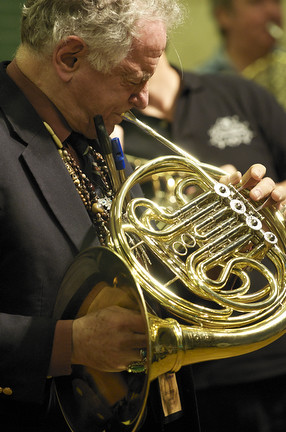 David Amram, at 80 years old, has lived a life full of musical adventure. Yet, in a way, he feels there's still a lot more to come. That's why the year 2011 has been a celebration of David Amram: the First 80 Years. David is still writing music, he's still entertaining at venues from Moab, Utah to Kerrville, Texas, to Greenwich Village. And all the while, David finds time to encourage others, especially younger artists and musicians. He sees this as part of his gig.
Jokingly, David recently wrote to me: "I promised my children that if I don't hit the big time by the time I reach 90...I will enroll in dental school So that gives me ten more years of barnstorming before I settle down."
These four short segments (about 8-10 minutes each) are drawn from a conversation with David at the 2011 Kerrville Folk Festival. Take your time, enjoy them. Hopefully, you will come away energized by David and his fresh outlook. That's the way he always strikes me and I've been tapping into David's energy field ever since I first met him in Austin in the early 70s. Here's to David Amram, 80 years young.
-James Baker
Tuesday, July 5, 2011
Why stop?
Why did Rossini retire at the age of 37 after his 39th opera? A recent NY Times article looks into it:
Why do you think he left the music world?
Meanwhile in other opera thoughts - in London - mezzo Joyce DiDonato is preparing a beautiful Cinderella by Jules Massenet - read her entry here.
THERE are lots of theories. Maybe Gioachino Rossini was tired. He might have been devastated by the death of his beloved mother. Or perhaps it was his health, or shifts in art or politics. His detractors insinuated that he had simply grown rich and lazy.
All we know for sure is that he stopped. His 39th and final opera,“Guillaume Tell,” known today almost solely for its overture, will receive rare performances on Saturday and on July 15 at the Caramoor International Music Festival in Katonah, N.Y., in a semi-staged version to be conducted by Will Crutchfield. At the work’s premiere, in 1829, Rossini was 37 and the most celebrated composer in the world, the creator of exuberant comedies like “Il Barbiere di Siviglia” and “La Cenerentola” and sober tragedies like “La Donna del Lago” and “Otello.”
“During the last 12 years,” Stendhal had written in 1824 , “there is no man who has been more frequently the subject of conversation, from Moscow to Naples, from London to Vienna, from Paris to Calcutta, than the subject of these memoirs. His glory already knows no other bounds than those of civilization itself, and yet he is barely 32.”
Then something happened. Rossini lived for nearly 40 years after “Guillaume Tell” but never wrote another opera. His “great renunciation,” as one biographer called it, is a phenomenon without equivalent in music history. Other composers — Elgar, Rachmaninoff, Sibelius, Ives — have retired long before their deaths. But none have been as famous, or as young, as Rossini.
He was born in 1792 in Pesaro, Italy. His father made a little money playing the trumpet and horn, and his mother was an aspiring singer. Rossini showed early talent as a composer, and in 1810, at 18, he had his first hit with the one-act farce “La Cambiale di Matrimonio.” As would be the case with many of his operas, the libretto was stale, but Rossini’s music sparkled.
Why do you think he left the music world?
Meanwhile in other opera thoughts - in London - mezzo Joyce DiDonato is preparing a beautiful Cinderella by Jules Massenet - read her entry here.
Monday, July 4, 2011
Rousing Round Top
There's still a chance to hear great classical music in a perfect setting at Round Top International Music Festival, it continues through July 16th. Here are some examples from last weekend at Festival Hill:
JoAnn Falletta leads Strauss' Don Juan:
Middle movement of Christopher Rouse's Flute Concerto with Carol Wincenc:
Elgar's Enigma Variations:
JoAnn Falletta leads Strauss' Don Juan:
Middle movement of Christopher Rouse's Flute Concerto with Carol Wincenc:
Elgar's Enigma Variations:
Subscribe to:
Posts (Atom)