"Hell is full of musical amateurs: music is the brandy of the damned." - George Bernard Shaw
The first event for the San Antonio Symphony's Tchaikovsky Festival is this Sunday! TCHAIKOVSKY FESTIVAL PRO-AM January 30, 2011
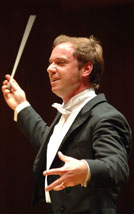
Sebastian Lang-Lessing, conductor
A FREE event at Municipal Auditorium, 3:00 p.m.Come hear amateur musicians perform side-by-side in this unique concert experience with San Antonio Symphony musicians and Music Director Sebastian Lang-Lessing in Tchaikovsky's Romeo and Juliet Overture-Fantasy.
Music workshop and rehearsal will begin at 3:00 p.m. with the Romeo and Juliet Overture-Fantasy in full concert at approximately 4:30 p.m.
This idea falls from the Baltimore and Pittsburgh Symphony Orchestras, as an outreach, celebration and fundraiser. You can read abou the BSO's Rusty Musicianshere and here. They have even gone so far to create a summer music academy!
"It is so difficult to mix with artists! You must choose business men to talk to, because artists only talk of money." - Jean Sibelius
The San Antonio Symphony announced their plans last fall for a Professional/Amateur rehearsal and concert, so KPAC Host John Clare filled out the forms, and learned in December he would be playing first violin!
Clare says, "I am looking forward to working with friends, and at the same time feel a little weird, maybe a bit nervous, having this chance to perform with the Symphony. My most recent dealings are artist interviews and acting as Santa Claus and Jack O'Latern, not with my violin! It will also be a chance to see the other side, literally, of Music Director Sebastian Lang Lessing."
See you Sunday at the Municipal for the kickoff of what will be a rousing Russian work! The San Antonio Symphony's Tchaikovsky Festival continues April 29th through May 8th.
"Every artist was first an amateur." - Ralph Waldo Emerson
This month, Lang Lang joins the San Antonio Symphony for Rachmaninoff's Second Piano Concerto. Music Director Sebastian Lang Lessing discusses meeting Lang Lang years ago:
There's more information, including tickets for the San Antonio Symphony and Lang Lang here: http://www.sasymphony.org/
This week we highlight concerts from Mission Espada to the Callioux Theater!
Mostly Motets The San Antonio Chamber Choir starts their 2010-11 season with a concert celebrating the music of Heinrich Schutz, Brahms and Rindfleisch .
Fri, Oct 1 - 8 pm Mission Espada
Sat, Oct 2 - 8 pm Mission Espada
Sun, Oct 3 - 3 pm St. Luke’s Episcopal Church
Visit http://www.sachamberchoir.org/ for more information.
At the Helm Sebastian Lang Lessing starts his tenure as Music Director of the San Antonio Symphony Saturday night. On the program is Mahler's First Symphony, Brahms' “Lost Youth”, “In Silent Night”, “Evening Serenade” and Bizet's “Avec la garde montante”. The concert is sold out...but they begin their regular season next weekend, October 8 & 9 with Christopher Seaman, conductor and pianist Jeffrey Swann in a program including Dukas' The Sorcerer's Apprentice, Chopin's Piano Concerto No. 2 and Vaughan Williams' Symphony No. 2, "London". Find out more at SASymphony dot org.
If it's not Baroque Musical Bridges Around The World presents Mercury Baroque, a chamber ensemble from Houston, performs the opera “La Serva Padrona” by Giovanni Pergolesi staged with period costumes and furniture.
Also Edwin Colon Zayas - award-winning master of the Puerto Rican cuatro national instrument - plays a blend of native folk and dance music, and salsa with Sabor a Cultura, a group of musically-gifted youngsters from Cayey, Puerto Rico.
It takes place Sunday afternoon at 3 at McAllister Auditorium, on the campus of San Antonio College, 1300 San Pedro. More at 210-464-1534 or musicalbridges.org
What's Opera Doc? Symphony of the Hills start their 2010-11 season next Thursday, October 7, at 7:30pm. The program from the Callioux Theater in Kerrvile is called Opera Highlights - featuring local and regional vocalists in excerpts from favorite operas. Dr. Jay Dunnahoo leads Wagner, Verdi, Puccini, Bizet and more!
Everything you ever wanted to know about Mahler's First Symphony but were afraid to ask...the San Antonio Symphony performs Mahler One this Saturday as they welcome their new music director Sebastian Lang Lessing (pictured right).
GUSTAV MAHLER: Born in Kalischt, Bohemia, July 7, 1860; died in Vienna, May 18, 1911
MAHLER: SYMPHONY NO. 1 IN D MAJOR
I. Langsam. Schleppend. "Wie ein Naturlaut" - Immer sehr gemächlich (Slow. Dragging. “Like a sound of nature.” - Always very easygoing)
II. Kräftig bewegt, doch nicht zu schnell (with vigorous movement, yet not too fast)
Trio: Recht gemächlich (well moderated)
III. Feierlich und gemessen, ohne zu schleppend (solemn and measured without dragging)
Audiences in Gustav Mahler's time didn't know what to make of his music. Today, we're used to movies and TV shows that careen from action-packed explosions to romance, from comedy to melodrama. But more than a century ago, when Mahler inserted folk melodies into his enormous symphonies, some listeners thought he was nuts.
Mahler's First Symphony was originally conceived as a tone poem in two parts. Loosely based on Jean Paul's novel Titan, the structure was this: Part I: "From the Days of Youth," Music of Flowers, Fruit and Thorn—1. Spring and No End; 2. Flowers; 3. In Full Sail; Part II: "The Human Comedy"—4. "Stranded!" Funeral March in the Style of Callot; 5. D'all Inferno al'Paradiso (From Hell to Heaven). These titles were accompanied by more extensive programs describing the metaphorical content of each movement. In Jean Paul's Titan we have a youth gifted with a burning artistic desire that the world has no use for, and who, finding no outlet or ability to adapt, gives way to despair and suicide. Mahler apparently saw himself in this figure, as he described this work as autobiographical in a very loose sense. On the other hand the music, some of which Mahler actually accumulated from various earlier works, contradicts this program in so many ways, especially in the triumphant conclusion, that Mahler later withdrew it. He eventually came to scorn the application of specific programs to his symphonies in general.
With the sole exception of Brahms, and possibly Sibelius, there is probably no other composer than Gustav Mahler whose First Symphony represents such a towering achievement. But whereas Brahms was 43 when his First Symphony was completed, and Sibelius was well into his thirties, Mahler was just 28 when he finished his. The gigantic orchestral fresco was begun in 1884 and completed four years later. Mahler subtitled the work “Titan,” after a novel by Jean Paul. The first performance took place in Budapest on November 20, 1889 with the composer conducting. In 1896, Mahler eliminated the so-called “Blumine” (Flowers) movement, which did not resurface until 1959.
Among the innovations one can point to in this symphony are the largest assemblage of orchestral musicians hitherto required in a symphony, and the incorporation of café, pop and gypsy music, especially in the Funeral March. The evocation of nature in a symphony had been realized before (notably in Beethoven’s Pastoral Symphony and in Berlioz’ Symphonie fantastique), but nowhere else are the very sounds of nature so pervasively and integrally bound up with the symphonic thought than in the first movement of Mahler’s First. The opening moments of the work are unforgettable - that sustained, distant sound of strings spread across a six-octave range vividly suggests the mystery and peace of the night into which are interjected cuckoo calls, far-off fanfares and fragments of still-unformed melodies. Mahler described the passage as depicting the awakening of nature from its long winter sleep. The mood of the lengthy slow introduction is finally dispelled by the sprightly theme of Ging heut’ morgens über’s Feld, (one of the Songs of a Wayfarer, first heard in the cellos), followed by another lusty, outdoorsy theme. The music grows in fervor and intensity, culminating in a mighty outburst from the entire orchestra. The release of enormous, pent-up energy is crowned by three great whoops from the horn section, and the movement continues on its merry way to its ultimate conclusion.
The second movement of Mahler's Symphony No. 1 is a folk dance. The robust scherzo movement is notable for its heavy rhythmic impulses derived from the Ländler, a rural Austrian dance. Special effects here include the use of the woodwind section en masse (often up to 12 players) in featured roles, breathtaking fanfares from the horns and trumpets, and signals from the “stopped” horns with their bells raised (“stopped” here meaning the players’ right hands are pushed deep into the bells, choking off the sound). A charming Trio, introduced by a poetic horn call, provides gentle contrast.
The third movement is a spooky funeral march, with klezmer accents, based on the "Frere Jacques" melody (“Bruder Martin” in German-speaking lands). The original title of “Funeral March” refers to Mahler’s parodistic portrayal in sound of a mock funeral procession, depicted in a book of Austrian fairy-tales. Beasts of the forest accompany a dead woodsman’s coffin to his grave. The use of a double bass instead of a cello to begin the “Frère Jacques” tune adds a touch of the grotesque. The tune is used as a canon or round, with additional instruments taking up the tune in turn (bassoon, cellos, tuba, etc.) without waiting for the previous one to finish.
After this material has run its course we hear a new, sentimental theme in the oboes, this one also bearing a counter-theme, now in the trumpets. Suddenly the sounds of a country fair intrude, music of a gypsy band with its corny melodies and relentless “um-pah” accompaniment. And then, as if from another world, Mahler offers an interlude of quiet repose - almost a dream sequence - in music of sublime beauty and gossamer textures. Eventually the mournful “Frère Jacques” music returns and the movement slowly recedes into the furthermost reaches of audibility.
Anyone who has dozed off to the third movement’s funereal tread will be instantly and rudely shocked back to his senses with the hellish outburst that opens the finale, one of the most terrifying passages in all music. To Mahler, that opening cymbal crash followed by the roar of drums represented a flash of lightning emitted from a thunder cloud. Strings swirl and rage, woodwinds in their highest registers scream in anguish, brass proclaim terrifying fanfares, and percussion evoke the din of battle and cataclysmic conflicts.
When the torrent of notes finally subsides, strings sing a consoling, infinitely tender and yearning song. The violent conflicts return, but this time they result in heroic proclamations from the brass. However, victory and fulfillment are not quite yet achieved. In another long, generally quiet passage, the music slowly gathers momentum, ultimately reaching a towering climax for which Mahler instructs the entire horn section to stand while it delivers fanfares from within an orchestra gleaming in a thousand dazzling, spectacular colors.
In 1899, audiences in Vienna hissed when they heard it; they were used to Brahms and Beethoven. But today, it's hard to resist the pull of a piece that begins like Mahler's First: The strings play a single note spread out over seven octaves. Mahler said it was "like a sound of nature."
For the premiere of his First Symphony (in Budapest in 1889), Mahler tried giving the audience something to think about, something to attach itself to. He told people that his music was loosely based on a novel by the popular writer Jean Paul, a novel called The Titan. After the premiere, Mahler started revising his symphony, and he eventually decided to drop the association with Jean Paul's book. But the name, "The Titan," stuck.
Here is the entire symphony with the NY Philharmonic & Lorin Maazel:
Last year, classical music fans in Los Angeles and New York welcomed Gustavo Dudamel and Alan Gilbert as their music directors. This season Ricardo Muti is making headlines in Chicago as he takes the reins of the Chicago Symphony Orchestra.
Here in San Antonio, the orchestra celebrates "The SLL Era" as Sebastian Lang Lessing becomes music director. KPAC has followed the search and talked with SLL on both of his trips (April 2009) (November 2009) and when it was announced (announcement and interview).
Currently we're collaborating with the San Antonio Symphony to "Find SLL" - a scavenger hunt that can land you free tickets to the orchestra concerts in October. Through September 26, a life-size cutout of Maestro Lang-Lessing, will be placed at random businesses around town. The "Flat Sebastian" or "SLL" will be at each location for one week, starting on Tuesdays. To win tickets, take a photo of yourself standing next to SLL with your camera or smart phone and send it to tickets@saysmphony.org with your contact information. You may also upload your picture to the San Antonio Symphony Facebook page, and the Symphony will contact you. (TPR Host John Clare pictured left at an undisclosed location) Clues as to where to find SLL each week will be broadcast weekdays at 9:00 a.m. here on KPAC 88.3 FM, and will also be available on the San Antonio Symphony Facebook page, and through the Twitter feeds @SASym and @TPRClassical. Sebastian Lang-Lessing makes his debut with the San Antonio Symphony as our new Music Director on October 2 with a special concert featuring Mahler’s Symphony No. 1, the "Titan."
Cypress releases Volume 2 of Beethoven The Cypress String Quartet is exploring the music of Ludwig van Beethoven, who said “Music is a higher revelation than all wisdom and philosophy, it is the wine of a new procreation, and I am Bacchus who presses out this glorious wine for men and makes them drunk with the spirit.”For their latest release, Cypress has given us Beethoven’s Opus 130 and the last quartet music he ever wrote, a finale he revised. Cellist Jennifer Kloetzel discusses the recording process and the monumental Grosse Fuge. You can hear some more of their Beethoven here: http://www.cypressquartet.com/listen.html The Cypress Quartet visits San Antonio in January 2011 as guests of the San Antonio Chamber Music Society.
YOSA on the go The Youth Orchestras of San Antoniostart their season later this month with a chamber music concert focusing on Italy. Music Director Troy Peters talks with host John Clare about leading youth in classical music, engaging their energy and what to expect on their Gold Series. This season includes visits from Jaime Laredo & Sharon Robinson, the Youth Orchestra of Monterrey, and Jon Anderson from the rock group YES. Hear YOSA and Troy Peters in action on September 25, 2010, at Coker United Methodist Church starting at 7 p.m.
Turtle Island New Release The Turtle Island Quartet has done it again, expanding the sound and repertoire for quartets with a new cd of Jimi Hendrix and their own David Balakrishnan. The new release features Electric Ladyland plus the genre bending Tree of Life. Balakrishnan talked with host John Clare while on tour in LA, about the group’s technique and the unique sound they play. Sample part of the new album on the Quartet’s website: http://turtleislandquartet.com/ They’ll be in Brownsville, TX at the UTB/TSC Arts Center on October 1st, 2010 7:30pm a program called Danzon with Luna Negra Dance Theater & Paquito D’Rivera.
SA Sym SLL Preview Next month, the San Antonio Symphonywelcomes Sebastian Lang Lessing as it’s ninth Music Director in 76 years! On the program will be Mahler’s First Symphony and a champagne toast. It will be a busy season for Lang Lessing who continues to conduct around the world…but he took out a few minutes to chat with host John Clare about outreach, festivals and of course, his first year in San Antonio.
You can win a voucher for tickets to see & hear the San Antonio Symphony – check it out – Find SLL! Don’t forget to relive the 2009-10 season of the SA Symphony Sunday afternoons with your host Nathan Cone on KPAC & KTXI through September.
Barry in Bavaria! KPAC's Barry Brake has had a busy summer. Not only is he a new father (congrats – Greta is so cute!) but Barry spent some time in Bavaria, Germany this summer. While there, Barry interviewed Markus Zwink, music director for the Oberammergau Passion Play, which has been performed in Oberammergau, Bavaria, Germany by its inhabitants since 1634.
Part 1:
Part 2:
Listen to all of these interviews on the NEW Classical Spotlight page, and remember to tune in Thursdays at 1pm on your classical oasis, KPAC & KTXI!
Well, right now he’s conducting in Australia, but Sebastian Lang-Lessing makes his debut with the San Antonio Symphony as their new Music Director on October 2 with a special concert featuring Mahler’s Symphony No. 1, the “Titan.” Until then, KPAC and the San Antonio Symphony are celebrating the coming season with a fun scavenger hunt that will allow you to win some tickets to that performance, or another San Antonio Symphony performance in October.
From August 17 to September 26, a life-size cutout of the San Antonio Symphony’s new Music Director, Sebastian Lang-Lessing, will be placed at random businesses around town. The “Flat Sebastian” or “SLL” will be at each location for one week, starting on Tuesdays. To win tickets, take a photo of yourself standing next to SLL with your camera or smart phone and send it to tickets@saysmphony.org with your contact information. You may also upload your picture to the San Antonio Symphony Facebook page, and the Symphony will contact you.
Clues as to where to find SLL each week will be broadcast weekdays at 9:00 a.m. on KPAC 88.3 FM, and throughout the day. They will also be available on the San Antonio Symphony Facebook page, and through the Twitter feeds @SASym and @TPRClassical (hashtag #findsll). This blog will also have information.
Texas Public Radio will speak with all the candidates for the San Antonio Symphony Music Director Search and have them on Classical Spotlight. You'll get a chance to learn more about the maestros - don't forget to attend the symphony and fill out the questionaire as well!
This week we talk with Sebastian Lang-Lessing. John Clare asked about the program and music.


 The Youth Orchestras of San Antonio