We couldn't resist another Top Ten post, and the first for 2012 is "Top Ten Classical Music G/Rounds" for Ground Hog Day!
10.Handel/Halvorsen Passacaglia [listen]
9. Archangelo Corelli La Folia [listen]
8. Igor Stravinsky The Rite of Spring: Spring Rounds [listen]
7. Gustav Mahler: Symphony No. 1 Feierlich Und Gemessen, Ohne Zu Schleppen [listen]
6. Orlando Gibbons: Ground [listen]
5. Ottorino Respighi: Ancient Airs and Dances II: Bergamasca [listen]
4. Johann Sebastian Bach Chaconne [listen]
3. David Diamond Rounds [listen]
2. Henry Purcell When I am laid in earth [listen]
and the #1 G/Round is from Peter Schickele and PDQ Bach:
The Art of the Ground Round, for three baritones and discontinuo, S. 1.19/lb (P.D.Q. Bach):
Loving is as easy
Please, kind sir
Jane, my Jane
Golly golly oh
Nelly is a nice girl
Classical Music, 24-hours a day, on KPAC 88.3 FM in San Antonio and KTXI 90.1 FM in the Hill Country.
Monday, January 30, 2012
Sunday, January 29, 2012
Quarteto Vivace Brazil on Itinerarios
San Antonio's venerable Tuesday Musical Club has a history of over 100 years. The Club was founded in 1901 by Anna Hertzberg, providing she and a group of her friends the opportunity to perform and discuss classical music. In October, 1923, Tuesday Musical Club presented the first of an annual series of concerts called Musical Teas. These "teas" are now known as the Artist Series Concerts.
The great thing about Tuesday Musical Club's Artist Series is that the musical spotlight is as likely to focus upon young ensembles as old, and long established artists. Such was the case last October when the fledgling Quarteto Vivace Brazil (at 4 years old the ensemble seems very young considering the 111 years of the Tuesday Musical Club) came to town with a varied program ranging from J.S. Bach to Astor Piazzolla.
The concert by the Quarteto parallels the programming criteria for Itinerarios. The music might be European, even American, but the performances are all rooted to Latin America by the nationality of the ensemble. As their name indicates, this is a Brazilian ensemble, which explains their inclusion of music by Heitor Villa-Lobos and Alfredo da Rocha Viana Filho, better known in Brazil as Pixinguinha.
A few words about Pixinguinha will perhaps underscore his importance in the evolution of Brazilian music. Pixinguinha was a flutist, saxophonist, composer and arranger born in Rio de Janeiro in 1897. He is one of the most important composers of the Brazilian musical form known as choro, shepherding the 19th Century form into the 20th Century by introducing a more contemporary harmony and a jazz-like improvisitory character to this popular music of the streets. Listen for one of Pixinguinha's most popular choros, Carinhoso, on this week's edition of Itinerarios.
In addition to Pixinguinha, other highlights from the Quarteto Vivace Brazil's San Antonio concert will be blended into this week's mix of music with Latin American roots. Itinerarios airs at 7PM every Sunday evening on KPAC-San Antonio (88.3fm). The program is hosted by James Baker.
The great thing about Tuesday Musical Club's Artist Series is that the musical spotlight is as likely to focus upon young ensembles as old, and long established artists. Such was the case last October when the fledgling Quarteto Vivace Brazil (at 4 years old the ensemble seems very young considering the 111 years of the Tuesday Musical Club) came to town with a varied program ranging from J.S. Bach to Astor Piazzolla.
The concert by the Quarteto parallels the programming criteria for Itinerarios. The music might be European, even American, but the performances are all rooted to Latin America by the nationality of the ensemble. As their name indicates, this is a Brazilian ensemble, which explains their inclusion of music by Heitor Villa-Lobos and Alfredo da Rocha Viana Filho, better known in Brazil as Pixinguinha.
In addition to Pixinguinha, other highlights from the Quarteto Vivace Brazil's San Antonio concert will be blended into this week's mix of music with Latin American roots. Itinerarios airs at 7PM every Sunday evening on KPAC-San Antonio (88.3fm). The program is hosted by James Baker.
Friday, January 27, 2012
What she wore
Did you see The Enchanted Island last weekend in HD? It was a stunning performance which will be encored February 8th - a must see/hear if you didn't the first time around, or if you want to relive it again!
The all star, stellar cast included soprano Danielle de Niese, who was just on WNYC's Soundcheck yesterday.
de Niese shared her fashions today in the New York Times:
I was hugely happy with the performance and really relieved. There’s no margin of error with a live simulcast. After, I greeted friends and fans in a black one-shouldered tiered dress, also from Donna Karan. I paired it with black Sergio Rossi peep-toe pumps and a Marc Jacobs purse. Then it was off to Plácido Domingo’s reopened restaurant, Pampano, to celebrate the tenor’s birthday: 71.
We're also a huge fan of the new release Beauty of the Baroque - there's definitely a double entendre in that title! Especially gorgeous emotion and singing come back to back (Bach to Bach?! lol) in tracks 4 and 5: Handel's Air “Let the bright Seraphim” from Samson, Act III and Purcell's “Thy hand, Belinda – When I am laid in earth” (Dido’s Lament) from Dido and Aeneas, Act III. Run, don't walk, to get this recording!
Labels:
baroque,
Danielle de Niese,
decca,
new cd,
new release
Inspiration & Joy turned up to 11
Some artists are so "in the zone" that they seem unaffected by the world around them. Then there are those that feed off of life and transform it into their art. Franz Liszt and Robert Schumann were two of the later. It would seem that Alexander Scriabin's work habits were so ingrained and the world of music he inhabited so consuming that few outside influences could get at him. But one did, a beautiful young Russian girl the composer met in Paris, she stole his heart and inspired some of the composer's most lovely compositions.
It is one thing to fall in love at first sight, it is another thing to propose marriage and to be accepted; this must have driven Scriabin insane with joy. But the story doesn't end there. For a full account and all the music inspired by this painful first love, join me at the Piano this Sunday afternoon at 5 on KPAC & KTXI.
host, Randy Anderson
Tosca, An Unlikely Masterpiece
Looking at the matter from our perspective, that is to say of over a hundred years since the premiere in 1900, it seems impossible to imagine that anyone couldn't like Tosca. In fact there was long contemplation on the "how of it " from the composer, he spent seven years just thinking about it and then four trying to finish it. Arguments between the librettist, the composer and his publisher seemed to never end. Where Giacomo Puccini was obsessed and intent, the writing team of Giacosa and Illica, were in no way in agreement. One thought it could be pulled off with the proper amount of work and radical alteration of the Sardou play written for Sarah Bernhardt. The other thought it hopeless and frankly hardly worth the bother. Shaw seemed to say it all when he dubbed it famously "an old fashioned, shiftless, clumsily constructed, empty- headed turnip ghost of a cheap shocker". Well, he hadn't heard Vissi d'arte, let alone Callas and Gobbi, so we can cut him some historical slack.
The magical translation from word and stage to opera house and music is an object lesson in, well, you just never know. It isn't that Shaw by modern standards is wrong, who would know of the play today without Puccini, but rather that the composer was right for his purposes. Incredibly he found the musical and architectural language, something between a wildly inventive recitative, so close to real speech and yet not. And more importantly the essential and crucial short hand that could communicate character, mood and endless forward action all at once. In the four vocal pillars of the work, Vissi d'arte (Tosca) purity and dedication in art as moral instruction to character; the Te Deum in the church, with organ no less (for Scarpia) mixing the sacred and the profane, lust and moral transgress that mocks religiosity and finally Mario Cavaradossi's two tenor home runs both romantic and idealistic. Recondita Armonia and E lucevan le Stelle are still being hummed after over a hundred years, all respect otherwise to Mr. Shaw. Then there is the quicksilver orchestration in which moods bel canto would have spun out in vast scena rendered in somersaults of emotion, like cinematic jump cuts and yet retain their lyric integrity. That the supposedly impossible is done and even has the sense of a living, breathing organism, is perhaps one hallmark of a masterwork and the talent of a great artist. Such is Puccini's Tosca; so good that it even shows up in movies!
Tune in this Saturday at noon for the Metropolitan Opera's production of Tosca, here on KPAC and KTXI .
by Ron Moore
The Legacy of Franz Schubert
To mark the birthday of Franz Schubert (1797-1828), born January 31st, we thought we'd close our celebration of his legacy throughout this month with some representative works of his final phase.
Composer Benjamin Britten has remarked that perhaps the most productive eighteen months in the history of Western Music was the period just after the death of Beethoven, and before the appearance of Wagner, Liszt and Verdi. In this period Schubert composed his Symphony #9 in C, the Quintet in C for strings, the last three piano sonatas, and the song cycle, “Die Winterreise.” That it could be accomplished at all is astonishing enough. That he never reached his mid -thirties (dying younger than either Mozart at 35 or Mendelssohn at 48) and was both impoverished and ill--well, that's stuff for the ages.
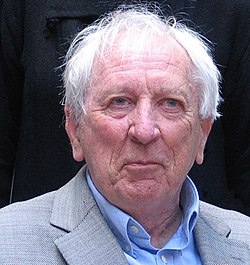
| Poet, Tomas Transtromer. |
Among the works and performers we’ll hear in this finale before his birthday are Wilhelm Furtwangler’s recording of the 9th symphony, Clara Haskil in the last piano sonata, the D.960, excerpts from the oratorio “Lazarus,” music from the piano trios, and the culmination of our Winter's Journey with a haunting “Leiermann” and s ongs from “Schwanengesang.” We will also feature a twentieth century artifact of Schubert's inspiration, a poem by the Swedish poet and winner of the Nobel Prize for Literature 2011, Tomas Transtromer, Schubertiade, read by Gemini Ink Director Rosemary Catacalos.
Please join us as we celebrate the extraordinary legacy and miraculous achievement of Franz Schubert this Sunday afternoon at 2pm on KPAC and KTXI.
--Ron Moore
Thursday, January 26, 2012
Classical Spotlight: Concerts!
There are lots of Classical Music Concerts to hear and experience this weekend!
TPR Cinema: A Clockwork Orange Tonight, January 26, 2012 7:30 p.m. at Santikos Bijou (Rated R)
San Antonio Symphony
Beethoven 6 and 7 January 27 and 28, 2012 8 p.m., Majestic Theatre Sebastian Lang-Lessing, conductor Beethoven Symphony No. 6 in F major, Op.68, “Pastorale” Symphony No. 7 in A major, Op.92
Olmos Ensemble
Saturday, January 28, 2012 4:30 p.m. at the Majestic Theatre (FREE) Quintet for Piano and Winds in E-flat major, Op. 16 Septet in E-flat major, Op. 20
San Antonio Chamber Music Society
Sunday, January 29, 2012 3:15 p.m. at Temple Beth-El Pacifica Quartet Dvořák Cypresses Shostakovich: Quartet No. 9, Op. 117 Beethoven: Quartet in F Major, Op. 59, No.1 “Razumovsky”
Musical Bridges Around the World
Beethoven Violin Sonatas 2 6:30 p.m. at San Fernando Cathedral January 29, 2012
Emanuel Borok, violin and Elena Portnaya, piano Sonatas No. 1, Op. 12, No. 1, No. 2, Op. 12, No. 2 & No. 3, Op. 12, No. 3
San Antonio International Piano Competition
Tuesday, January 31, 2012 7:30 p.m. at Christ Episcopal Church Audrey Andrist, piano Sonata No. 22 in F, Op. 54 Sonata No. 31 in A-flat, Op. 110 Sonata No. 18 in E-flat, Op. 31, No. 3, “The Hunt” Sonata No. 15 in D, Op. 28, “Pastorale”
SAC Guest Recital
Bulgarian pianist Ina Selvelieva playing Beethoven Piano Sonata Op. 110, Muczynki Desperate Measures(Paganini Variations), Three Pieces by Bulgarian composer Vesseline Stoyanov and the 2nd Sonata of Rachmaninoff. Thursday, Feb 2, 7:30 MacAllister auditorium
Wednesday, January 25, 2012
The fest continues
We're looking forward to more Beethoven this weekend, from the SA Symphony, SA Chamber Music Society, Musical Bridges Around the World, SA International Piano Competition and the Olmos Ensemble.
Tomorrow night, TPR Cinema presents A Clockwork Orange! We thought we'd share part of Fantasia as the SA Symphony plays Beethoven's 6th and 7th symphonies on Friday and Saturday night.
Friday, January 20, 2012
Myer plays Beethoven's Theresa
From SAIPC, Spencer Myer plays the Sonata #24 by Beethoven
There's more tonight and this weekend with the SA Symphony, YOSA, Musical Bridges Around the World and SOLI Chamber Ensemble!
Labels:
#BeethovenFest,
Beethoven,
HD video,
Piano,
Piano Sonata,
saipc,
san antonio symphony
Two geniuses - one program…
Nikolai Medtner had it all, winning the Great Gold medal for piano performance at the Moscow Conservatory and a talented composer who had the respect of his peers. So why don't we music lovers hear more about him?
The answer is a combination of events not all under the composer's control. The Russian revolution and flight to the west for safety, added to this was Medtner's determination to promote his own music rather than give concerts of the classics. His friend Rachmaninoff secured a tour of America and here "Medtner Evenings" didn't go over too well. Record companies were interested in the pianist but Medtner wanted to record his own music and not what the A&R men thought would sell. Enter World War II and the composer, living in England, was separated from his royalties from his German publishers forcing Medtner into poverty. Even in our own time Medtner's bad luck continues with his greatest and most fluent of his advocates, the Australian pianist Geoffrey Tozer, dying far too young at the age of 55. Although he is gone, his recordings remain and on the Piano this Sunday you can hear Medtner's Fairy Tales and Second Piano Concerto performed by the man Tatiana Nikolayeva said "plays like a Russian".
Hear music for the brain as well as the heart on the Piano this Sunday afternoon at 5 on KPAC & KTXI.
host, Randy Anderson
Labels:
Geoffrey Tozer,
Nikolai Medtner,
the piano
Subscribe to:
Posts (Atom)