Texas Public Radio will speak with all the candidates for the San Antonio Symphony Music Director Search and have them on Classical Spotlight. You'll get a chance to learn more about the maestros - don't forget to attend the symphony and fill out the questionaire as well!
This week we talk with James Judd. John Clare asked about the program, music and recording cds for Naxos.
Friday, March 20, 2009
Thursday, March 19, 2009
SA Opera: Dress Rehearsal
San Antonio Opera presents the Mikado Friday and Saturday nights and Sunday afternoon. Thursday morning they performed for 1700 middle school and high school students.
The Mikado runs Friday and Saturday nights at 8 and Sunday afternoon at 2 in Lila Cockrell Theater. Learn more by listening to Classical Spotlight on KPAC & KTXI Thursday afternoons at 2pm and online, http://www.tpr.org/programs/classicalspotlight.html
The Mikado runs Friday and Saturday nights at 8 and Sunday afternoon at 2 in Lila Cockrell Theater. Learn more by listening to Classical Spotlight on KPAC & KTXI Thursday afternoons at 2pm and online, http://www.tpr.org/programs/classicalspotlight.html
 The Mikado with San Antonio Opera, dress rehearsal Thursday morning...
Classical Spotlight: SA Opera
San Antonio Opera presents The Mikado this weekend (tomorrow through Sunday) at the Lila Cockrell Theater. They've also just announced their 2009-2010 season, take a look at their press conference, including director John de Lancie!
You can hear the whole Gilbert and Sullivan work with San Antonio Opera tomorrow through Sunday at Lila Cockrell Theater. Tickets and information at 225-5972 or online at SA Opera dot com.
You can hear the whole Gilbert and Sullivan work with San Antonio Opera tomorrow through Sunday at Lila Cockrell Theater. Tickets and information at 225-5972 or online at SA Opera dot com.
Wednesday, March 18, 2009
Classical Spotlight: Angela Malek
Recently soprano Angela Malek and pianist Kristin Roach came by the TPR Studios to talk about their performance of French songs, Sunday March 22nd at St. Mark's Episcopal Church. They also sang some Jacques Leguerney!
Tune in for the full interview on Classical Spotlight, Thursday afternoon at 2pm on KPAC and KTXI.
Tune in for the full interview on Classical Spotlight, Thursday afternoon at 2pm on KPAC and KTXI.
Tuesday, March 17, 2009
1K Classics
An archive of 1,000 classical music recordings has been put online. The British Library Archival Sound Recordings project includes previously unheard concertos and sinfoniettas from composers such as Bach. There are also orchestral suites and concerti by Haydn, Beethoven, Mozart and Brahms.
The recordings are available to visitors to the British Library reading rooms and can also be accessed by the public at home. However music can only be streamed rather than downloaded.
The two-year project has been funded by the Joint Information Systems Committee, an offshoot of the education funding councils.
Now read about James Baker's story of recordings...
Monday, March 16, 2009
Behind the scenes
 I thought you might enjoy some shots from SOLI Chamber Ensemble during the filming of their rehearsal early this month.
 They perform tonight at Gallery Nord and tomorrow at Trinity University's Ruth Taylor Recital hall.
You can also check out these webisodes online here.


Friday, March 13, 2009
John Eliot Gardiner Plays Brahms
New Brahms reviewed by James Baker
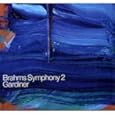
Of all the movements in classical music over the past 35 years, the period instrument movement was one of the most controversial. Not only did it force listeners to confront the possibility that the performance styles they had grown up with were invalid, but it also forced listeners to hear so-called historically valid performances which were painfully short on technical merit. We all recall the strange timbres of historical instruments and the unreliable intonation of the instruments and the players. Not only that, but we began to hear some of our favorite music played at speeds which were contrary to modern convention – sometimes slower, but more often faster than we could comfortably accept.
Throughout the emergence of these historically informed performances there were numerous mistakes and mis-steps. Sometimes the academicians who were doing the historical grunt work were not the best at actually showing us how the music should sound. Performance technique was still well behind the playing by musicians who used modern instruments. Listeners fell into two camps which rarely shared company in the concert hall. Proponents of period instrument performance could often not be dragged in to hear a modern symphony orchestra, especially if they were playing Bach or Handel. On the reverse face of the coin, those who preferred their Bach conducted by Herbert von Karajan would only deride those ensembles such as Collegium Aureum which valiantly labored on in search of performances which would sound as though they came from Bach’s hand.
Over the years a new performer began to emerge, one who studied and tamed the early instruments. Concurrently, instrument makers began to copy old instruments, so called period instruments, working from an historical intention but with modern workshops in which to build their authentic instruments. As these two factors came together, ensembles such as Concerto Koln, Concentus Musicus and the English Baroque Soloists rose as cream to the top and began to show the true possibilities for playing and hearing old music in new ways.

John Eliot Gardiner entered the scene in 1964 when he formed the Monteverdi Choir. The Monteverdi Orchestra, an ensemble which played modern instruments, followed. In these early years, Gardiner’s approach was one which has emerged in the 21st century as a valid compromise to going completely historic in performance approach. Gardiner and his musicians played in a style which was informed by study of early performance practice. Their reasoning was that performance thus rooted would honor more closely the intentions of the composer. This resulted in performances like those found in Gardiner’s recording of Claudio Monteverdi’s Vespers of 1610.
At this point, Gardiner was on the verge of retooling his Monteverdi Orchestra into the period instrument ensemble The English Baroque Soloists. With this move, in 1977, Gardiner and his musicians became major players in the still struggling period instrument movement. Although Gardiner’s reputation is still rooted, somewhat in a misinformed manner, in the Baroque and earlier, i.e. Bach, Handel and Monteverdi, he startled us all in 1990 with the formation of his Romantic and Revolutionary Orchestra, a period instrument ensemble meant to play Beethoven, Schumann and, most recently, Brahms.
Gardiner’s talent allows him to move freely from period instrument performance to modern instrument performance. He has a musician’s heart which makes engaging music wherever he might be conducting, whether it be with the Vienna Philharmonic or, more recently, playing Brahms Symphonies with his Orchestre Révolutionnaire et Romantique. With the Brahms, Gardiner is opening a bold, new arena which is sure to stir both the fans of performances on authentic instruments and those who believe Karajan, Bohm, Solti and others got it right with a modern orchestra.
Gardiner’s new Brahms, there are now two volumes released, including the First and Second Symphonies, is about more than just the sound of the late-19th Century orchestra. The new recordings include examples of Brahms’ choral music with orchestra, underpinning Gardiner’s intellectual and musical argument that these are important bridges into Brahms’ purely orchestral writing. He presents the evidence in a convincing manner, but also in entertaining interpretations. These are performances which come from the collective hearts and souls of Gardiner’s committed musicians and even if they don’t sway the reluctant listener to the ways of period instrument performance, they will entertain and engage. The tempi are perhaps a bit faster than you will be accustomed to, but give them a chance and they won’t disappoint those seeking well-interpreted Brahms. Within moments there are “aha” phrases and musical gestures which will focus your attention on what Gardiner is about. Yes, the historically valid instruments do lend a transparency to the orchestral timbre, but Gardiner and his musicians also show us other ways of approaching Brahms at a number of different interpretive levels, and this is why you might want to put these recordings onto your music player and spend some time with them. The playing is of the first rank. There are few technical limitations which will distract the listener from Brahms’ great symphonic vision. If you like Brahms, you will not come away disappointed. If you don’t like Brahms (and I accept there may be a few of you out there), listen with an open mind and the freshness of these performances just might show you the possibilities.

The entire cycle of Brahms Symphonies has now been recorded. I don’t know the release schedule, but notable is the fact that these are being produced for and marketed by Gardiner’s own label Soli Deo Gloria. This is worth supporting! Recordings are available through amazon.com and also by download from eMusic.com.
Of all the movements in classical music over the past 35 years, the period instrument movement was one of the most controversial. Not only did it force listeners to confront the possibility that the performance styles they had grown up with were invalid, but it also forced listeners to hear so-called historically valid performances which were painfully short on technical merit. We all recall the strange timbres of historical instruments and the unreliable intonation of the instruments and the players. Not only that, but we began to hear some of our favorite music played at speeds which were contrary to modern convention – sometimes slower, but more often faster than we could comfortably accept.
Throughout the emergence of these historically informed performances there were numerous mistakes and mis-steps. Sometimes the academicians who were doing the historical grunt work were not the best at actually showing us how the music should sound. Performance technique was still well behind the playing by musicians who used modern instruments. Listeners fell into two camps which rarely shared company in the concert hall. Proponents of period instrument performance could often not be dragged in to hear a modern symphony orchestra, especially if they were playing Bach or Handel. On the reverse face of the coin, those who preferred their Bach conducted by Herbert von Karajan would only deride those ensembles such as Collegium Aureum which valiantly labored on in search of performances which would sound as though they came from Bach’s hand.
Over the years a new performer began to emerge, one who studied and tamed the early instruments. Concurrently, instrument makers began to copy old instruments, so called period instruments, working from an historical intention but with modern workshops in which to build their authentic instruments. As these two factors came together, ensembles such as Concerto Koln, Concentus Musicus and the English Baroque Soloists rose as cream to the top and began to show the true possibilities for playing and hearing old music in new ways.
John Eliot Gardiner entered the scene in 1964 when he formed the Monteverdi Choir. The Monteverdi Orchestra, an ensemble which played modern instruments, followed. In these early years, Gardiner’s approach was one which has emerged in the 21st century as a valid compromise to going completely historic in performance approach. Gardiner and his musicians played in a style which was informed by study of early performance practice. Their reasoning was that performance thus rooted would honor more closely the intentions of the composer. This resulted in performances like those found in Gardiner’s recording of Claudio Monteverdi’s Vespers of 1610.
At this point, Gardiner was on the verge of retooling his Monteverdi Orchestra into the period instrument ensemble The English Baroque Soloists. With this move, in 1977, Gardiner and his musicians became major players in the still struggling period instrument movement. Although Gardiner’s reputation is still rooted, somewhat in a misinformed manner, in the Baroque and earlier, i.e. Bach, Handel and Monteverdi, he startled us all in 1990 with the formation of his Romantic and Revolutionary Orchestra, a period instrument ensemble meant to play Beethoven, Schumann and, most recently, Brahms.
Gardiner’s talent allows him to move freely from period instrument performance to modern instrument performance. He has a musician’s heart which makes engaging music wherever he might be conducting, whether it be with the Vienna Philharmonic or, more recently, playing Brahms Symphonies with his Orchestre Révolutionnaire et Romantique. With the Brahms, Gardiner is opening a bold, new arena which is sure to stir both the fans of performances on authentic instruments and those who believe Karajan, Bohm, Solti and others got it right with a modern orchestra.
Gardiner’s new Brahms, there are now two volumes released, including the First and Second Symphonies, is about more than just the sound of the late-19th Century orchestra. The new recordings include examples of Brahms’ choral music with orchestra, underpinning Gardiner’s intellectual and musical argument that these are important bridges into Brahms’ purely orchestral writing. He presents the evidence in a convincing manner, but also in entertaining interpretations. These are performances which come from the collective hearts and souls of Gardiner’s committed musicians and even if they don’t sway the reluctant listener to the ways of period instrument performance, they will entertain and engage. The tempi are perhaps a bit faster than you will be accustomed to, but give them a chance and they won’t disappoint those seeking well-interpreted Brahms. Within moments there are “aha” phrases and musical gestures which will focus your attention on what Gardiner is about. Yes, the historically valid instruments do lend a transparency to the orchestral timbre, but Gardiner and his musicians also show us other ways of approaching Brahms at a number of different interpretive levels, and this is why you might want to put these recordings onto your music player and spend some time with them. The playing is of the first rank. There are few technical limitations which will distract the listener from Brahms’ great symphonic vision. If you like Brahms, you will not come away disappointed. If you don’t like Brahms (and I accept there may be a few of you out there), listen with an open mind and the freshness of these performances just might show you the possibilities.
The entire cycle of Brahms Symphonies has now been recorded. I don’t know the release schedule, but notable is the fact that these are being produced for and marketed by Gardiner’s own label Soli Deo Gloria. This is worth supporting! Recordings are available through amazon.com and also by download from eMusic.com.
Spotlight: Soley SOLI
An indepth look at SOLI Chamber Ensemble's Soley SOLI concerts on March 16th and 17th, 2009. Conversations with Diego Vega, Kevin Puts, and Robert Xavier Rodriguez, plus music by Henry Purcell and John Williams. Includes rehearsal footage from early March with the ensemble and interviews not seen before.
Produced by John Clare for Texas Public Radio in San Antonio.
Produced by John Clare for Texas Public Radio in San Antonio.
Green Sounds
There's a concert tomorrow (Saturday) at 7pm in the First Unitarian Universalist Church of San Antonio sanctuary. An acoustic guitarist, singer, and composer who furthers the ideals of ecology, justice, and peace, Jim Scott makes an impact on hearts and minds across the world. Tickets are $10 or $15 at the door. All the benefits go to Jim Scott and our committee to help make our campus a Green Sanctuary, beginning with the addition of a rainwater catchment system. I hope this is not too late of notice, but we would love for you to come join our cause and listen to some great music! We have a blog writeup here (http://firstuugreen.wordpress.com/) and Jim's website is here (http://www.jimscottsongs.com/) for more information.
Subscribe to:
Posts (Atom)